Saturday, July 16, 2011

FAQ, Part 6

Why is adding strides bad in the hunter ring?
Hunters are supposed to have a ground-covering stride. Adding strides means that your horse does not meet this requirement of the class. If you consider the hunter ring's distant roots in the hunt field, a horse that can gallop easily would make a better hunter than one that has to waste energy trying to keep up with a short, choppy stride.

What is the “left to left” rule in the warm-up?
The “left to left” guideline in the warm-up ring is a way to avoid collisions by having riders pass left shoulder to left shoulder. That means that if two riders are approaching one another in opposite directions, the rider on the left rein should take the outside track while the rider on the right rein should move to the inside. This guideline is complicated by the nature of the jumping warm-up ring, with riders needing to get to the jumps in the middle from both reins. Generally, the riders who are jumping should have priority and the others should make way for them to be able to get to the jumps. That means that every rider in the warm-up ring should keep an eye on who is jumping which jump and make an effort not to block their way (and not cross in front of the jumps while there are horses approaching or landing from them).

At what age should a child showing in the hunters start to wear tall boots?
There isn't really a set age for a child to move to tall boots. If the child is wearing braids and hair bows, tall boots don't usually look appropriate. I would say that, personally, at the point where the child is really riding the pony and fitting it well instead of looking like a tiny passenger, tall boots are a good choice. It's also fairly safe to go along with what other riders in the division are wearing in your area.

Can you tie for reserve champion at a horse show?
You can have the same number of points as someone else and in that sense be tied for reserve champion, but there should always be a tie-breaker. In the hunters, the horse with the most points over fences will take the championship. If there is still a tie, most horse shows will move to a coin toss. In the jumpers, a coin toss is almost always used, although it is possible to use a jump-off.

This is the Equine Canada rule for hunters:
5. In the case of a tie the championship and/or reserve shall be awarded to the horse that has accumulated the most points over fences. If there is still a tie, the tied horses shall be shown at walk, trot, canter and gallop (pregreen and green hunter not to gallop) to determine champion and reserve. Tossing a coin to break the tie is permissible if all participants agree. This competition shall be judged as an independent hunter under saddle class with conformation, quality, substance, soundness and performance to count as prescribed throughout the appropriate division.
This is the Equine Canada rule for jumpers:
3. In the case of a tie for the championship there may be a jump-off after the last jumping class of the Competition. Exhibitors tied for Champion or Reserve may elect to jump-off or toss.
Can you use brown gloves at a hunter show?
Yes you can. There is no rule about glove colour in the EC rulebook, but it would be wise to keep the gloves a conservative and discreet colour that matches the rest of the rider's attire.


Wednesday, July 6, 2011

How to Jog

One of the most common mistakes I've noticed so far this show season has been made in the jog. The winner, never having led a jog before, starts a pattern that results in the judge not being able to see most of the class jog, or only crosses half the ring so that there isn't room for the last horses to be jogged!

In this post we'll be looking at the patterns that work in several different ring set-ups, as well as a couple of definite no-no's.

Jogging is not complicated, but you need to keep a few things in mind when planning your track:
  • Make your turn on the left rein so that you're not trying to outrun your horse on the outside.
  • Halt in a location where the line-up will not block the judge's view of the remaining horses.
  • Halt well back from the in-gate. You should proceed forward towards the ribbon-giver only when the judge has approved the class and the announcements begin.
  • Make sure that you use enough of the ring that there will be room for the entire line-up to halt while still leaving room for the last horses to jog for more than a couple of steps.
  • If you're further back in the line, halt about a horse length back from the horse in front of you so that everyone can fit in.
In these diagrams, the arrows beside the judge's booth show where the judge needs to be able to see the ring.  If you're blocking those arrows, you're blocking the judge's view of the jog.  If you are finishing the jog on the side furthest away from the judge, you can halt closer towards the in-gate since you can't block the judge's view. The dashed lines show where you should be trotting, and the dotted lines show where you can come down to a walk/halt.

Good patterns:


And some bad:

Halting in front of the judge's booth, blocking his/her view of the jogging horses 

Not jogging far enough into the ring, both blocking the judge's view and not giving the last horses room to jog

If you've had a good round and you're waiting for the jog, take a look at the ring and figure out which pattern might work if you're called first. As long as you jog far into the ring and make sure not to halt in front of the judge, you can't go too wrong!


Saturday, May 14, 2011

When Bad Weather Hits

Let's face it: we don't always have perfect weather for showing. Sometimes, the weather goes beyond miserable and becomes dangerous. What should you do if that bad weather rolls around when it's your time to show?

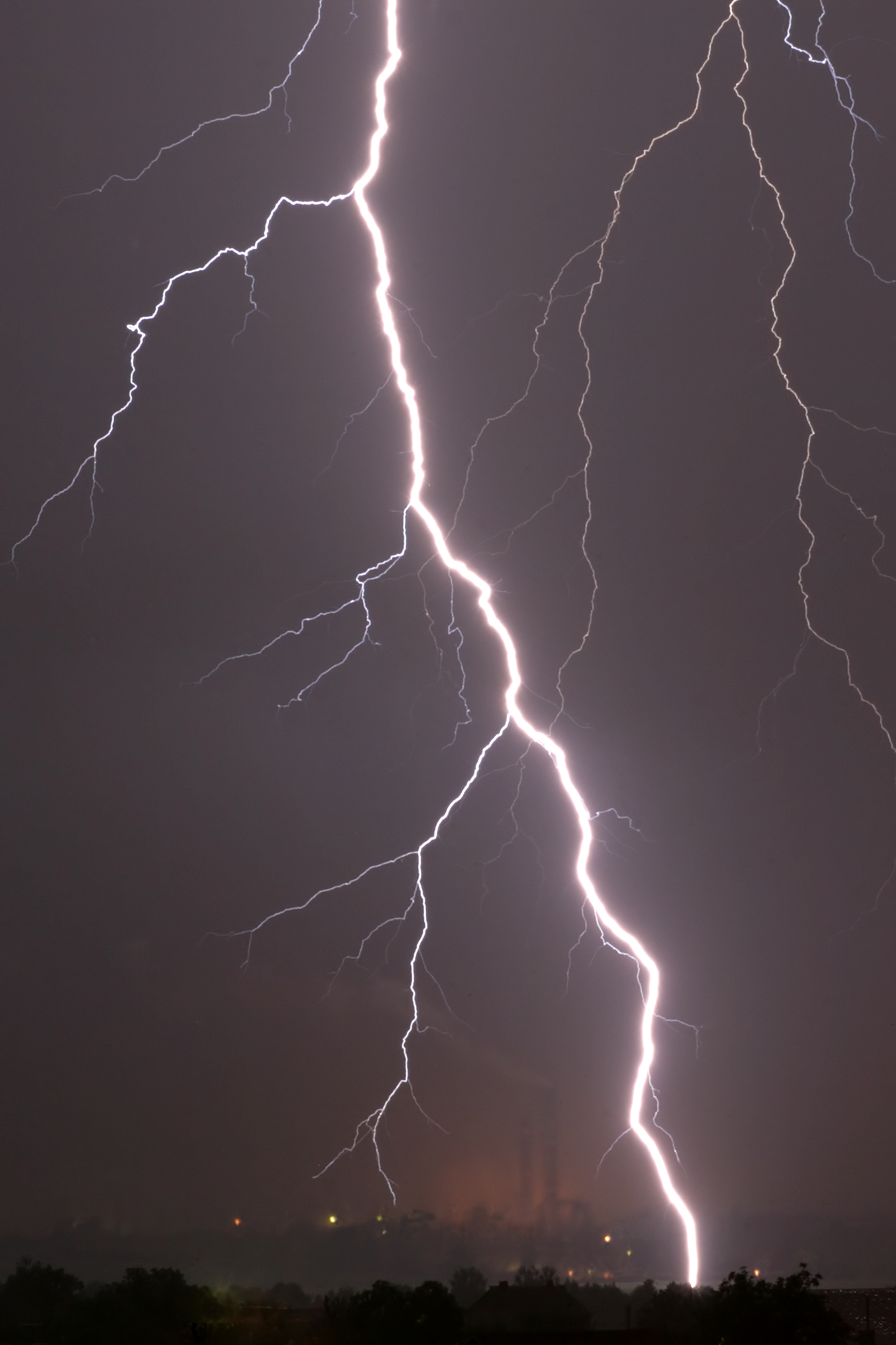
The most common cause of a dangerous weather delay is the thunderstorm. Usually, thunder will not stop a class, but lightning will. If you do hear thunder close by, you might want to back off your warm-up a bit if you're low in the order since you will have to do another warm-up if your class is delayed. When loud thunder is heard, most of the competitors and officials will pay close attention to the sky, so lightning is not likely to be missed. As soon as lightning is seen, the class should be stopped and all horses and riders should immediately head to a safe area (if the lightning occurs while you are in the ring, you will probably be allowed to finish your round). Do not worry that you will miss your class by heading to safety; delays are usually at least half an hour to ensure that the bad weather has passed.

Another source of weather-related delays is heavy rain. While the show will go on in light and moderate rain, at a certain point heavy rainfall will become dangerous when visibility is affected and the footing becomes saturated. I have witnessed three delays where the rain was so bad that the show had to be stopped for the day and all classes (and even the remainder of one class) moved to the following day. This type of delay is at the discretion of the officials since it's a subjective decision. Any decisions should be announced to all over the loudspeakers and at the in-gates and the show office. If a class must be delayed after it has begun, the course must remain the same after the delay in order to keep it fair for everyone.

The difference between weather-related delays and delays for accidents or other emergencies is that the show area will empty out during a weather-related delay. No one will hang around in anticipation of the resumption (which is a good thing for safety reasons), so it tends to take longer for everyone to get back to the ring and ready to show again.

Here's the EC rule for the interruption of classes. Check the rulebook for your national federation in case it differs.

ARTICLE A512 INTERRUPTION OF CLASS
1. In the event that a class in which horses compete individually is stopped while in progress by reason of storm, accident or other emergency, the class shall continue from the point at which it ceased and all scores already credited shall count.
2. In the event that a class in which horses compete collectively is stopped while in progress by reason of storm, accident or other emergency, the class when recommenced shall be held over in its entirety and no consideration shall be given to the performances before the class was stopped.


Saturday, April 30, 2011

Pre-Ordering Hay and Shavings

If you cannot bring your own hay or shavings to a horse show that provides stabling, you can buy them there instead (beware, however, of the horse show mark-up!). In order to simplify life, you can pre-order them on your stall request form. There should be a section on the form that will allow you to specify a number of hay bales and/or bags of shavings to split amongst your stable. If they will not be used for every horse in the barn, changes to the bill split can be made in the office (do this earlier in the week, not on the last day of the show).

There are several reasons for you to pre-order them instead of ordering when you arrive at the show:
  1. It's one less thing to stress about as you move in
  2. They will be there waiting for you (either all in one of your stalls or outside of your stabling area) when you arrive so that you can bed the stalls and feed the horses immediately
  3. It allows you to do the math of how many to order at home when you still have the ability to think straight
  4. It avoids the problem of either running around trying to find the delivery person who is not aware that your newly-made order is urgent, or discovering that it is too late in the day when you arrive and the delivery person has gone home

If you pre-order, it is safe to assume that any piles of hay or shavings that you find in your stalls upon your arrival belong to you. If you do not find any hay or shavings in your stalls but you have pre-ordered, check the area outside of your stalls. If they are left outside, the delivery person will usually leave a receipt tucked in the pile in order to identify the owner, so make sure that any receipt that you find matches your name before taking possession of anything.

If you have pre-ordered but do not find any hay or shavings near your stalls, keep an eye out for the delivery tractor as you unload your horses. If it is still early in the day and you see that the tractor appears to be busy, it is safe to assume that they are busy with deliveries and simply haven't gotten to yours yet. If you see that the tractor is quiet and others seem to have received their orders, it's time to go to the office to inquire about your order. Sometimes orders do get lost, either missed on your stall form or overlooked by the delivery person. If there are lots of orders still being delivered, it probably isn't worth bothering anyone about yours just yet.

If you have room in your trailer, bringing your own hay and shavings can be worth it because those at the show tend to cost at least twice as much as they would cost elsewhere.


Tuesday, April 26, 2011

Online Horse Show Reminder

Just a reminder for any of you who are interested in entering the online horse show that I mentioned a few weeks back here: you have about a week and a half left to enter!

Saturday, April 16, 2011

Victory Gallop Etiquette

The victory gallop, used as part of the ribbon presentation for important jumper classes, might seem pretty simple when viewed from outside of the ring. The horses all gallop around the ring in order of their placings and then go back to their stalls, right? Well, that's not quite all there is to it. There is some etiquette that you should be aware of before participating in your first victory gallop.

First, you should allow the winner of the class to enter the ring first for the ribbon presentation. Usually, all of the riders who have placed will assemble in the ring before the presentation begins (you may either halt your horse or walk around - it's up to you). Generally, all of the riders will hang back from the in-gate to allow the winner to enter first, regardless of the order in which the placings will be announced. The in-gate person will normally keep track of the placings in order for you to know whether to stick around for the presentation. Make sure that you keep all of your formal attire on for the presentation.

Once all of the ribbons have been given, the announcer will usually ask the riders to begin the victory gallop. The winner always leads the gallop, and is the one who will set the pace. None of the other riders should begin to gallop before the winner has started. The remaining riders should follow in the same order as their placings. Sometimes, a rider will choose not to take part in the victory gallop or is not comfortable having other horses behind theirs. In such a case, you might be invited to pass them, but passing is a no-no otherwise. If you are near the end of the line and the pace has slowed, you might even need to trot to keep from passing anyone in front of you. The person in front of you going slower than you would like is not a reason to pass unless they tell you to!

The horses who have placed second and lower will generally complete one lap of the ring before exiting, while the winner will sometimes continue on to do another lap or half-lap alone. Sometimes the winner will need to remain in the ring for photos, so if you have won, make sure that there is no one waiting there for you before you leave! You may leave the ring in any order. Some riders will take longer than others to pull up, so after the end of your one lap the order will often fall to pieces anyway and you are not expected to make an attempt to keep it. Always come back to a walk before exiting the ring for safety's sake. If your horse is excited and will not walk, you may circle as many times as you need to within reason in order to stop your horse.


Sunday, April 10, 2011

Online Horse Show

Are you looking for some extra practice before the show season starts?

I thought I'd let everyone know about an online horse show that is completely free to enter, and that allows you to get feedback from the comfort of your own barn. There are video classes for hunters, equitation and dressage, and photo classes for conformation and good grooming. An effort will be made to provide feedback to everyone who enters.

The only requirement to enter is that you must be a member of TheMuckBucket.com, which is a great, friendly bulletin board that is free to join.

To view the prize list, go to the horse show topic on TheMuckBucket.com here.  

Entries close on May 7, 2011.