Showing posts with label Paperwork. Show all posts

Friday, July 26, 2013

How to Open/Close Your Account

Many hunter/jumper shows do not require pre-payment of entries, which means that upon arrival, an account must be opened to pay the show fees. Certain shows, such as those that can only take limited entries and/or which require qualification, might require entries to be paid in full in advance and for any additional fees during the week (hay, shavings, etc.) to be paid either immediately or put on an open account. The prize list or show secretary should be able to advise you of each show's procedure.

The first step to open an account is to go to the show office and ask them to find your paperwork, which is usually under the barn or trainer name. You will need to provide any additional documents that are required (passport, Coggins test, etc.) and then provide payment. Form of payment will vary from show to show but paying by cheque is probably the most common, followed by cash or credit card (not every show is equipped to accept payment by credit card).

Leaving an open cheque (filled out with everything but the amount) will allow you to make class changes and order hay/shavings throughout the week while guaranteeing the office that you will pay. Your cheque will be filed away until you close the account. Some shows may allow you to leave a cheque written out for the exact amount of show fees based on your initial entries, which you can then exchange for a different cheque at the end of the show if the amount changes or write out an additional cheque for the difference.

Entries that the show has had trouble collecting payment from in the past (bounced cheques, etc.) might be designated as "cash customers" and will have to pay in cash as they go.

If a show accepts payment by credit card, the card number can be left in the office, similar to an open cheque. 

The form of payment can usually be changed when the account is closed, so if one form is easier to leave available at the beginning of the show but you actually want to pay with a different method, it shouldn't be a problem.

In most cases, only once you have left your payment and submitted all documentation will you receive your number. The office might allow for a single "barn" cheque to release the numbers of every horse for a given trainer if the trainer is willing to allow that cheque to cover the entries of any clients who do not close their accounts themselves. If you have multiple horses, you should be able to use one cheque to pay for them all if you so desire.

An account can stay open for the duration of a horse show and then must be closed. Whether the show lasts a day or a week, the account must be closed by the last day of the show or earlier. Even if there are subsequent shows taking place at the same location, each individual show must be paid for separately (if the show names are different or if each week is numbered, the shows are separate and not just one long horse show).

To close an account, you'll need to hand your number in (or simply recite the number if the show doesn't want them returned). The secretary will print out a bill and you can review it before paying because mistakes are occasionally made. Trainer splits should be taken care of early in the week because the office is often too busy to handle changes to them on the weekend (and changes at that point may affect those who have already paid), but mistakes on the office's part can be rectified because they are not your fault. Once you are satisfied that your bill is correct, you can pay (you will need to ask for your cheque back if you left one) and your bill should be stamped as proof of payment.

Prize money can be accorded either by removing it directly from the bill or by sending a cheque through the mail at a later date. In the former case, you may be given a cheque in the office if your prize money won is greater than your entry fees, or simply have reduced entry fees if the prize money is less. If cheques will be mailed out, you will need to pay your entry fees in full when your account is closed.

If you do not go to the office to close your account, you forfeit the right to dispute the charges on your show bill and your cheque will be filled out or your credit card charged by the show office. The office might charge an additional fee to those who do not close their accounts, and any entry that cannot be paid in full might be reported to the national federation to be placed in bad standing, which can affect the competitor's ability to attend other shows.

Do not forget to collect any documents that you left with the office such as passports; they are often left in a box for pick-up rather than handed back to you by the secretary. Anything left behind can either be brought along to the next show on the circuit or kept with the show venue or secretary, so trying to get documents back after leaving them behind isn't always easy.


Saturday, April 30, 2011

Pre-Ordering Hay and Shavings

If you cannot bring your own hay or shavings to a horse show that provides stabling, you can buy them there instead (beware, however, of the horse show mark-up!). In order to simplify life, you can pre-order them on your stall request form. There should be a section on the form that will allow you to specify a number of hay bales and/or bags of shavings to split amongst your stable. If they will not be used for every horse in the barn, changes to the bill split can be made in the office (do this earlier in the week, not on the last day of the show).

There are several reasons for you to pre-order them instead of ordering when you arrive at the show:
  1. It's one less thing to stress about as you move in
  2. They will be there waiting for you (either all in one of your stalls or outside of your stabling area) when you arrive so that you can bed the stalls and feed the horses immediately
  3. It allows you to do the math of how many to order at home when you still have the ability to think straight
  4. It avoids the problem of either running around trying to find the delivery person who is not aware that your newly-made order is urgent, or discovering that it is too late in the day when you arrive and the delivery person has gone home

If you pre-order, it is safe to assume that any piles of hay or shavings that you find in your stalls upon your arrival belong to you. If you do not find any hay or shavings in your stalls but you have pre-ordered, check the area outside of your stalls. If they are left outside, the delivery person will usually leave a receipt tucked in the pile in order to identify the owner, so make sure that any receipt that you find matches your name before taking possession of anything.

If you have pre-ordered but do not find any hay or shavings near your stalls, keep an eye out for the delivery tractor as you unload your horses. If it is still early in the day and you see that the tractor appears to be busy, it is safe to assume that they are busy with deliveries and simply haven't gotten to yours yet. If you see that the tractor is quiet and others seem to have received their orders, it's time to go to the office to inquire about your order. Sometimes orders do get lost, either missed on your stall form or overlooked by the delivery person. If there are lots of orders still being delivered, it probably isn't worth bothering anyone about yours just yet.

If you have room in your trailer, bringing your own hay and shavings can be worth it because those at the show tend to cost at least twice as much as they would cost elsewhere.


Monday, March 29, 2010

How to Befriend the Show Office Staff

There is a very good reason why you should be nice to the show office staff, besides basic politeness. If you try to make their lives easier, chances are that they will try to make yours easier, too. They can do everything from helping you do your adds more quickly, to contacting others at the horse show for you, to taking your word for it when corrections need to be made to your bill at the end of the show.

So what can you do to put yourself in their good books?
  • Be polite and friendly: You might be having a bad day, but put on a smile and say 'please' and 'thank you' when you're in the show office. In a sea of rushed and stressed-out competitors, a friendly face is a welcome sight.
  • Be patient: There can be a lot of waiting around at the busier times of the day, and pushing ahead in the line or getting upset about having to wait won't do anyone any good.
  • Have your memberships completed before the horse show: Doing it through the office makes for extra work for the office staff.
  • Get your entries in on time: There's a reason for the entry deadline, and sending your entries in late produces more unexpected work right before the show than they had planned for.
  • Provide all of the necessary paperwork (passports, memberships, Coggins test, etc.) and fill out your entries and stall order forms completely: There is a reason why everything is asked for and making the office do research or chase after you is extra work!
  • Be ready to pay at any time: Most shows require either payment up front or an open cheque before your numbers will be issued. Don't make the office staff's lives difficult by forgetting your cheque and expecting for them to make an exception for you (never expect to be given special treatment; just appreciate it when you are!).
  • Have all of the necessary information with you to do entries: If you don't know show names or exhibitor numbers, how will they? Don't make them search for information that you should already know.
  • Try to do your entries, bill payments and hay/shavings orders at quiet times: The show office is usually busiest at the end of the afternoon, as the classes are finishing or finished. On the last day, try to pay your bill in the morning if you don't have any afternoon classes.
Above all, be understanding. The office staff deal with hundreds of people every day and they do their best to get everything done efficiently and accurately. Mistakes are bound to happen and when they do, remember that the staff are only human. Most of us wouldn't last five minutes in their shoes when the office is at its busiest!


Thursday, March 25, 2010

Amateur Status

Possessing an amateur card will allow you to compete in divisions that are restricted to amateur riders (those divisions usually have 'amateur' or 'adult' in the name). If you are an adult, not having your amateur status will force you to compete in the open divisions against the pros. EC will take your word for it that you are an amateur once you have signed the amateur declaration unless someone complains to an official and challenges you.

Juniors are simply juniors and are not classified as amateurs or professionals.

Judges, course designers, stewards, grooms, etc. can all qualify as amateurs provided they meet the criteria. It does not matter that you are getting paid to do something with horses; it matters what you are getting paid to do.

In Canada, you must pay an extra $10 when renewing your Equine Canada membership in order to receive an amateur card. The amateur card is not really a card itself, but a ticked box on your EC membership card.

Who qualifies as an amateur? Let's check the EC rules:

ARTICLE G108 AMATEUR STATUS
1. All seniors competing in amateur classes at EC-sanctioned competitions must possess a current EC amateur card, which is purchased annually at the price listed in the EC Schedule of Fees. Competitors in FEI-sanctioned competitions must comply with the FEI definition of amateur.
2. A person competing in EC amateur classes must hold a valid EC senior sport license, have a current amateur card and adhere to the following guidelines:
a) Pilot Project: An EC amateur may hold an EC Instructor Beginner Certificate and teach within the context of the Instructor Beginner Certificate.
b) An EC amateur may accept remuneration for instruction of or coaching of the disabled.
c) An EC amateur may not accept remuneration for training a horse or for showing a horse at any EC-sanctioned competition. See Glossary for definition of “Remuneration”.
d) An EC amateur may not accept remuneration for coaching any person to ride or drive a horse, including riding or driving clinics and seminars.
e) An EC amateur may not train or show a horse, or instruct a rider or driver, when remuneration for this activity will be given to a corporation or farm which he or she, or his or her family, owns or controls.
f) An EC amateur may not act as an agent nor accept commissions for the sale, purchase and/or lease of a horse.
g) EC Amateurs may not use their name, photograph or any form of a personal association as a horse person in connection with any advertisement or article sold without the approval and signature of EC (e.g. product endorsement or advertisement of their activity as a coach).
h) An EC amateur may not enter into any form of sponsorship agreement that is in conflict with the provisions of this article.
See division rules for further information governing amateur status within divisions.
3. Persons who have not engaged in any of the activities in Article G108.2 (ag) during the preceding two (2) calendar years may request reinstatement as amateur competitors. Such requests must be sent in writing to EC.
4. Application for Equine Canada Amateur Status: 
a) Amateur status is issued by EC.
b) For EC members, certification of amateur status is issued annually on EC sport license cards.
c) All persons wishing EC amateur status must complete and sign the amateur declaration, which is on the sport license application/renewal form, affirming their eligibility.
d) Eligible amateurs who are not members of EC may receive amateur status issued by EC upon payment of the fee as listed in the current EC fee schedule.

In order to teach lessons or coach in exchange for remuneration and still compete as an amateur, you must possess an EC Instructor of Beginners Certificate (teaching beginners for pay without the certificate negates your amateur status) or teach only the disabled. Note that remuneration is not limited to money.

You may never train or compete on a horse and receive remuneration for it. 

If someone else gets paid when you coach, train or show, you are not an amateur.

You may profit from buying and selling your own horses, but you may not profit from finding or selling anyone else's horses.

You may not endorse any products unless you are given permission by EC. Sponsorship of the rider is prohibited..

In order to regain your amateur status after you have given it up for any of the above reasons, you must not have participated in any of those activities for a full two calendar years.

For clarity, here is the definition of remuneration from the EC rules:

REMUNERATION
1. For the purposes of these rules, remuneration is defined as any payment, either in cash or in kind, with the exception of gifts of token value.
2. Remuneration does NOT include:
a) payment made to any competition official
b) reimbursement for expenses without profit
c) winnings paid to a horse’s owner

If you do not believe that one of your fellow competitors is really an amateur and you wish to do something about it, you must follow the EC rules. Check out chapter 12 for the (lengthy) Dispute Resolution Policy.

7. If the status of an EC certified amateur is challenged, such challenge is subject to EC rules regarding official complaints. See Chapter A12, Dispute Resolution Policy for EC-sanctioned Competitions.


Tuesday, March 23, 2010

Adding and Scratching

When you enter a class that was not originally indicated on your entry form, it's called an add. When you remove yourself from any class, it is referred to as a scratch. There are two ways to do your adds and scratches at the horse show: the add/scratch sheet and the trainer add form.

The add/scratch sheet

Somewhere in the show office, you should find a pad of copy paper that will probably have the title 'Add/Scratch Form' written on it. It is a very short form, usually divided into an add column and a scratch column, with about five fields: the date, the horse's name, the horse's number, the rider's name and the class number.

The date is on there to determine whether or not the horse will be charged a late entry fee/scratch fee (it's not really important to fill that field out if you will be handing it directly to a secretary).

The horse's name and number are obviously important in identifying the horse. Make sure that you know the horse's number before entering the office in order to make life easier for the office staff.

The rider's name is important if you want to make sure that the correct rider is announced and credited with any results. It's also very important if you are entering any equitation classes.

The class number is, of course, one of the most important parts! The office should have extra copies of the show schedule available that you can check to find the correct class number.

Once you're done filling the form out and have signed it, hand it to the show secretary or place it in the designated basket  If you are adding or scratching the day of the class, you will be handed back a copy of the add/scratch form to bring to the in-gate so that you can be added to the class list there.

You will usually be charged an extra fee if you add or scratch the day of the class. If you add or scratch before the office closes the day before your class, you won't be charged any more than the class fee itself.

The trainer form

If you are adding or scratching multiple horses, individual add forms can be time-consuming. In such a case, ask the secretary if it would be possible to print off a trainer add form for you. These forms list all of the horses that are at the show with a particular trainer, complete with their show numbers and which classes they are already entered in. All that you will need to do to add or scratch is write the class number in the proper column (add or scratch) beside the correct rider's name (all of the riders from the original entry form should be listed). Sign it, hand it to the secretary and you're done!


Monday, March 22, 2010

Filling Out Your Entry Form

A big entry form can be a bit intimidating at first if you aren't used to filling them out. With everything packed onto a single page, fitting all of the required information in is often challenging.

Let's take a look at a typical entry form and then go through how to fill it out.


(click on the photo to enlarge)

The first field will be about your horse. It's very important to fill this out completely, especially if a passport number is asked for, so that your results will be attributed correctly. 

Following that, you should find a section about the horse's owner. Make sure to fill this out fully, too, because the owner needs to have certain memberships in order for the horse to compete and you don't want to waste the office's time by making them check for themselves. Make sure that you print very clearly and use a fine pen if space is limited!

You should also see a section about your trainer. This is important to fill out because entries will generally be grouped by stable so that when it comes to collecting the horses' numbers and splitting stabling/hay/shavings fees, things can be done quickly and easily. It will also make doing your daily entries easier because shows will often print out a 'trainer add form' that lists all of the horses entered under that trainer.

Next, you should see a section with room for multiple riders (smaller shows sometimes only allow one rider per entry form). It doesn't really matter which rider you put first if you're doing multiples as long as you are consistent with the numbering throughout the form. Be sure to fill out the membership numbers here, too, so that it's clear to the office that your riders are able to compete. Date of birth is not really necessary for those who are not entering age-restricted classes.

There will always be a waiver for you to sign at the end of the entry form; don't forget to sign it!

Different shows have different ways of putting the various classes on the entry form. Some forms will require you to put a mark beside the classes, circle the numbers of the classes that you would like to enter, or write in the class numbers in a blank space. Beside the class, write the number of the rider who will be doing that class (rider 1 or 2 from the rider information section). At some shows, you can write a 'T' if the trainer is riding.

It isn't necessary to add up the fees before sending in the form since the office will do that themselves and you are likely to add on extra fees during the show, anyway. The fee section is not the appropriate place to reserve a stall or a camper spot; that should be done on a separate stall request form.   

Now, why should you need to give the horse show your address? It actually benefits you to give it to them because many shows will put that address into a database and then send you their future prize lists by mail. The rider's home town is also sometimes announced at certain shows.  

If you aren't sure which classes you would like to compete in, you can leave that section of the entry form blank and it will be accepted for the majority of shows, provided you enter the rest of the information in full. Once you are at the horse show you can enter your classes by filling out an add/scratch form the day before you compete.


Saturday, February 6, 2010

Providing Proof of Ownership for a Passport

The passport process can get very confusing when it comes to providing proof of ownership of your horse. Equine Canada asks that you provide a copy of one of the following before they will issue your horse a passport:
  • A copy of a bill of sale
  • Breed registration papers stating ownership
  • A sworn and notarized affidavit of ownership
Previously, a notary was not required to produce an affidavit to EC's standards. Starting in 2010, this has changed and the affidavit must be notarized. It is therefore in your best interests, if you have purchased your horse, to make sure that you get a bill of sale in order to avoid having to go through a notary to get a passport.

Also be sure to ask the previous owner whether the horse already has a passport. One horse is not allowed to have multiple passports so you need to be given your horse's passport by the previous owner if it already has one. If you are unhappy with your horse's passported name, don't worry! For a fee, you can send the passport to EC and have the name changed to one of your liking.

Make sure that whatever you send is a copy - no original documents!

Saturday, January 30, 2010

Taking the Perfect Passport Photo

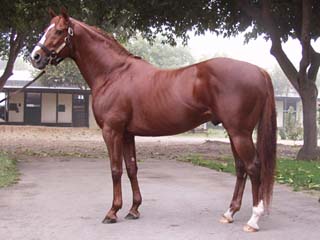
In my last post I went step-by-step through the passport application process. Now it's time to find out what your horse's passport photo needs to look like. While photos in which your horse does not look its best can be accepted, remember that the photo will stay with your horse for life, so try to make it nice!

First I'll outline the basics:
  • Use an uncluttered background that contrasts with your horse's colour.
  • You can use either a halter or a bridle, but a bridle looks best. Make sure that the bridle is clean and well-fitting. If you must use a halter, use one made of leather if possible.
  • Stand your horse so that all four legs are visible. Ideally, the legs nearest to the photographer will be square under the horse and the legs on the far side will be placed more under the horse's belly.
  • Groom your horse well before taking the photo!
  • Try to have the horse take up most of the frame. The handler does not need to be in the photo.
  • Try to have the horse's head turned slightly towards the camera so that any markings are visible. Try not to have the head turned too much or your horse will look like it has no neck!
Now I will go through a few examples of potential passport photos in order to show you exactly why it's best to follow those outlines.

Example 1


While this horse is groomed beautifully and is standing against a nice background, this photo would not be suitable for a passport. This is because not all four legs are clearly visible. The right front leg is hidden completely and most of the right rear leg is hidden as well. This is, however, a very nice example of how much your horse's head should be turned towards the camera; the stripe on his face is visible but the head is not turned so much that it makes his body look out of proportion.

Example 2


This is a very nice photo that would likely be accepted for a passport. This horse is beautifully turned out and he is presented against a nice background. All four legs are clearly visible and he is taking up the entire frame. His shiny and well-fitting leather halter does not detract from the photo. The only downside to this photo is that the horse's head is not turned towards the camera. If his head was turned slightly towards the photographer so that his markings, or lack thereof, were visible, this photo would be perfect.

Example 3


This is again a photo that would probably be accepted for a passport. This horse is well-groomed and all four legs, as well as his facial markings, are clearly visible. The photo would be even better if the photo was not taken on a slight angle. Because the horse's back end is closer to the camera than the front end, his body looks slightly disproportional.  This is, however, only an aesthetic issue. The halter name plate is also slightly distracting but it is within the rules.

Example 4


This photo is not acceptable as a passport photo. Only two legs are clearly visible as the right front is hidden by the left front, and the right hind is hidden behind the tail. That is what would cause the photo to be refused, but there are aesthetic issues with this one as well. The horse's head is turned slightly towards the camera, which is good, but the over-sized blue nylon halter is distracting. The handler and the white lead rope are also visible and distracting. 


Thursday, January 28, 2010

Getting Your Horse a Passport

In Canada, some levels of showing require your horse to have a passport. The process can be somewhat confusing so I will try my best to guide you through it here.

Step 1 - Download the form

Click here and select "EC Passport Application". Open that file and print it out.


Step 2 - Fill out the form
  • Your horse does not need to be registered in order to have a passport so don't worry about leaving the Registered Name and Registration Number fields blank.
  • Eligibility is not as complicated as it sounds.  Just put the lowest division that your horse is eligible for. If your horse has never shown, put something like "Baby Green Hunter" so that you can show in any division.
  • You don't need to go too crazy with the Markings section since that part of the passport will be left blank to be filled out by your vet, anyway.
  • Be sure to include proof that you own the horse. Follow EC instructions for what qualifies as proof. You can also check out my post on providing proof of ownership.
Step 3 - Take a photo

Now you will need to wait for a nice day, grab your camera and groom your horse until he or she shines. This photo will stay with your horse for life, so make sure it's a good one! The instructions call for a 4" x 6" side-view colour photo of your untacked horse. I will give you tips on taking a good photo in my next post.

Step 4 - Send it in!

This step is pretty self-explanatory. Make sure to double-check that you have all the necessary documents and send it all off to be processed.

Step 5 - What to do with your new blank passport

Your new passport will look very empty when it arrives. Your horse's name will be filled out, the photo will be glued in and that will be about it! You will need to make an appointment for your vet to come fill out the markings page. He or she will outline and describe your horse's markings and then sign the passport. You must get this done or your passport will not be considered valid!

Step 6 - For ponies only!

If you have a pony, you will need to have the measurement page at the back of the passport filled out (this is not necessary for horses).  See the show steward(s) about this at your first horse show and they will measure your pony for you.